Class of ’02 Graduates Chose a Path of Public Service
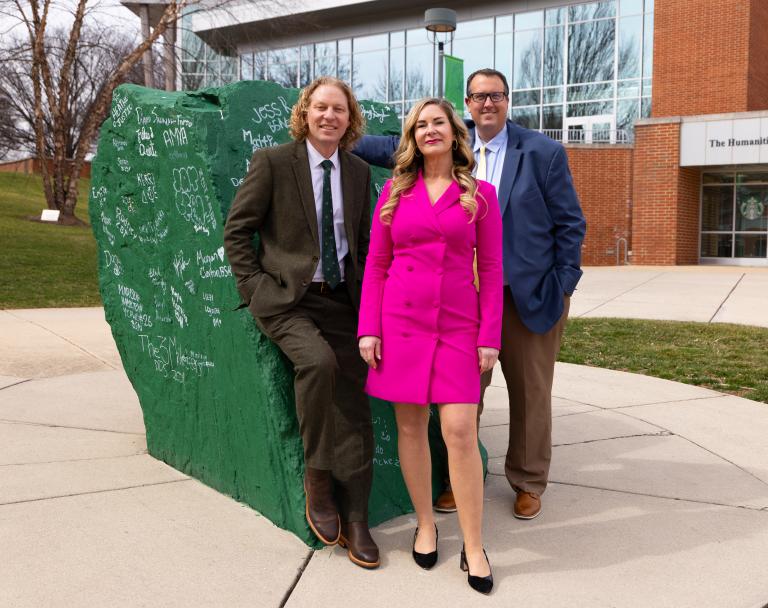
Nearly a quarter-century after graduating in 2002, three York College of Pennsylvania alumni carry forward a shared legacy of civic leadership and working for the good of communities.
In the spring of 2002, York College of Pennsylvania graduates crossed the commencement stage with diplomas in hand, signed the Ol’ Spart rock, and stepped out into a world in the throes of transition. The country was still reckoning with the shock of the terrorist attacks of Sept. 11, and the ensuing war on terrorism saw thousands of U.S. troops deployed to Afghanistan and the reshaping of foreign and national security policy. Technology’s rapid evolution was transforming how humans communicate.
While world views and political leanings spanned the gamut at York College, three who graduated that year embraced a mindset of civic responsibility and embarked on careers in public service: Seth Grove, Kevin Schreiber, and Jennifer Berrier.
Nearly a quarter-century later, Grove, who was a Public Administration major, is a longtime state House representative who soon will retire. Schreiber, a Public Relations major, also served as a state House representative and now leads the York County Economic Alliance. Berrier, a Political Science major, served as Pennsylvania Secretary of Labor and Industry and now leads the Pennsylvania Public Utility Commission.
Their academic focus and career paths have differed in form and perspective, but they share a commitment to community and a belief that public service is about impact over recognition.
Seth Grove learned to put policy before politics
Grove’s introduction to public service came long before he imagined himself running for office. He began working as a legislative assistant to state Rep. Stan Saylor in 1999, during Grove’s first year at York College. He spent his summers serving at fundraisers and getting a behind-the-scenes view of the Pennsylvania political machine. That unique perspective initially discouraged him from seeking elective office.
“I never really wanted to run for office because, as an insider, I saw how it never stops. You work late nights, and people stop you in the grocery store,” he says.
That mindset slowly shifted, though, as Grove saw the state House of Representatives spend year after year wrestling with the same issues. He knew the only way he could instigate policy change, especially in the areas of pensions and property taxes, was as an elected official.
In 2008, Grove ran as a Republican and was elected representative in the 196th District, which includes a large portion of York County. Confronting long-standing problems with practical solutions has remained a key trait of his almost two decades in office. His focus on government finance at York College helped lead him to fiscal-related roles in the House, where he’s known as “the Budget Guy.” He has served as Republican Chair of the Appropriations Committee, Majority Chair of the State Government Committee, and first Chair of the Government Oversight Committee.
After 18 years in the House, Grove recently decided to step down from politics and shift his career to the private sector. He’s ready to hand the baton off to the next generation of public servants and hopes that whoever comes next steps into the role with a commitment to service, not a hunger for power or a title.
“I realize that someone was in my seat 200 years before me, and hopefully someone will be in my seat 100 years after me. I’m a cog in a wheel here to serve my citizens,” he says. “Only do it if you want to help your neighbors, if you want to make your state better.”
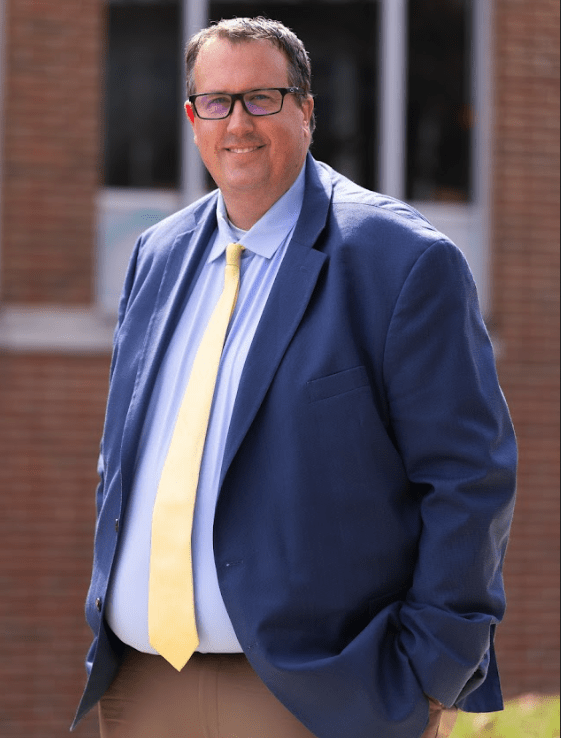
Kevin Schreiber aimed to pack as much into life as possible
Schreiber arrived at York College with leadership instincts already forming. He had long been involved in student government, serving on student council in grade school and as senior class president in high school.
Choosing York College was less about strategy and more about intuition. He was accepted to the College and Drexel University, but it was the vibe at York College that attracted him.
Initially a Political Science major, Schreiber pivoted to Public Relations during a period when he wasn’t sure whether politics would be the right fit for him. He believed shifting to PR would make him more well-rounded and expand his career options.
Schrieber’s instincts proved true. The skills he gained, including writing, public speaking, and crisis communication, have been indispensable during his time as an elected official and as the leader of a local organization.
A substantial perk of attending York College was the small class sizes and the student-to-teacher ratio. Anonymity was impossible. That closeness fostered lasting relationships with fellow students and professors.
After graduation, Schreiber entered local government, spending almost a decade as Director of Community and Economic Development for the City of York under two mayors. It was there that he gained a ground-level understanding of how policy decisions affect neighborhoods, businesses, and families.
“There’s no better start than working for local government,” he says.
In 2013, Schreiber was elected as a Democratic representative in Pennsylvania’s 95th District, which includes York City, and served until 2016. After leaving office, he became President and CEO of the York County Economic Alliance.
“I rolled the dice to say, let’s try this out, and try to pack as much into life as possible and try to have some fun,” he says. “One of my key mantras is how much impact and good can you do in the world?”
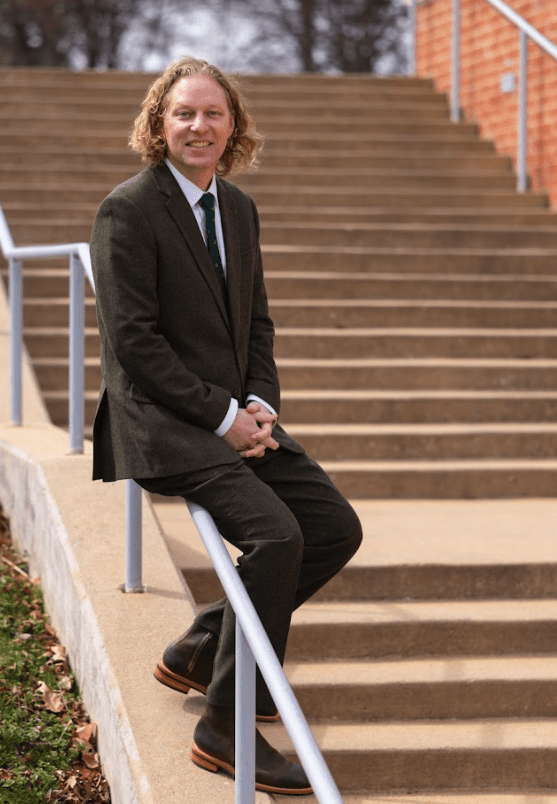
Jennifer Berrier honed listening as a leadership skill
Berrier ended up at York College, not even sure she wanted to attend college. A commuter student balancing work and school while helping raise two younger siblings, Berrier rarely had time to delve into student life outside of classes. Without the flexibility to pursue internships and extracurriculars, she focused intensely on coursework while enjoying the engaging and thought-provoking discussions encouraged by her York College professors.
“I developed a passion for political science and learning how different models of government worked,” she says. “History, philosophy, and the building of civilizations always interested me. Striving to answer those questions of ‘how did we get here’ and ‘where are we going’ always captured my interest.”
After graduating from York College, Berrier still didn’t have a clear idea of what career she wanted to pursue. The intellectual foundation she built at the College carried her to Widener University School of Law, where she completed an externship as a law clerk at the Pennsylvania Department of State. That experience helped solidify a desire to work in public service.
For 17 years, Berrier served with the Pennsylvania Department of Labor and Industry. In 2021, Gov. Tom Wolf appointed her Secretary of Labor and Industry. Berrier recalls interviewing with Wolf, who asked if she knew whose signature was on her degree. She learned that during her time at the College, Wolf, who would take office in 2015, served on the York College Board of Trustees. He inked his signature on the degrees of Berrier, Grove, and Schreiber.
“Who would have known it would come full circle?” Berrier says.
Since 2023, Berrier has served as Executive Director of the Pennsylvania Public Utility Commission, where she is part of a team working on hotly debated topics such as the proliferation of data centers and the generation of enough energy to support in-demand technologies.
“It’s fulfilling, working in the public sector, when you’re a part of a workforce helping to drive protections and nurture an environment for managing these types of decisions,” she says.
While her years as a public servant have taken her through some of the state’s most rigorous challenges, including a global pandemic and the ensuing shutdown, Berrier always strives to stay centered by listening and carefully considering multiple approaches to issues.
“I think it’s incredibly important to fully recognize the potential impact of your decisions, while in a leadership role in the public sector, because there are real people and businesses who are affected by those decisions,” she says. “It’s magnanimous when you think about it, but it’s about listening, being thoughtful, considering the information put forward by experts in their respective fields, and putting forward the best course of action with people at the center.”
“It’s not about ego; it’s about serving people to the best of your ability.”
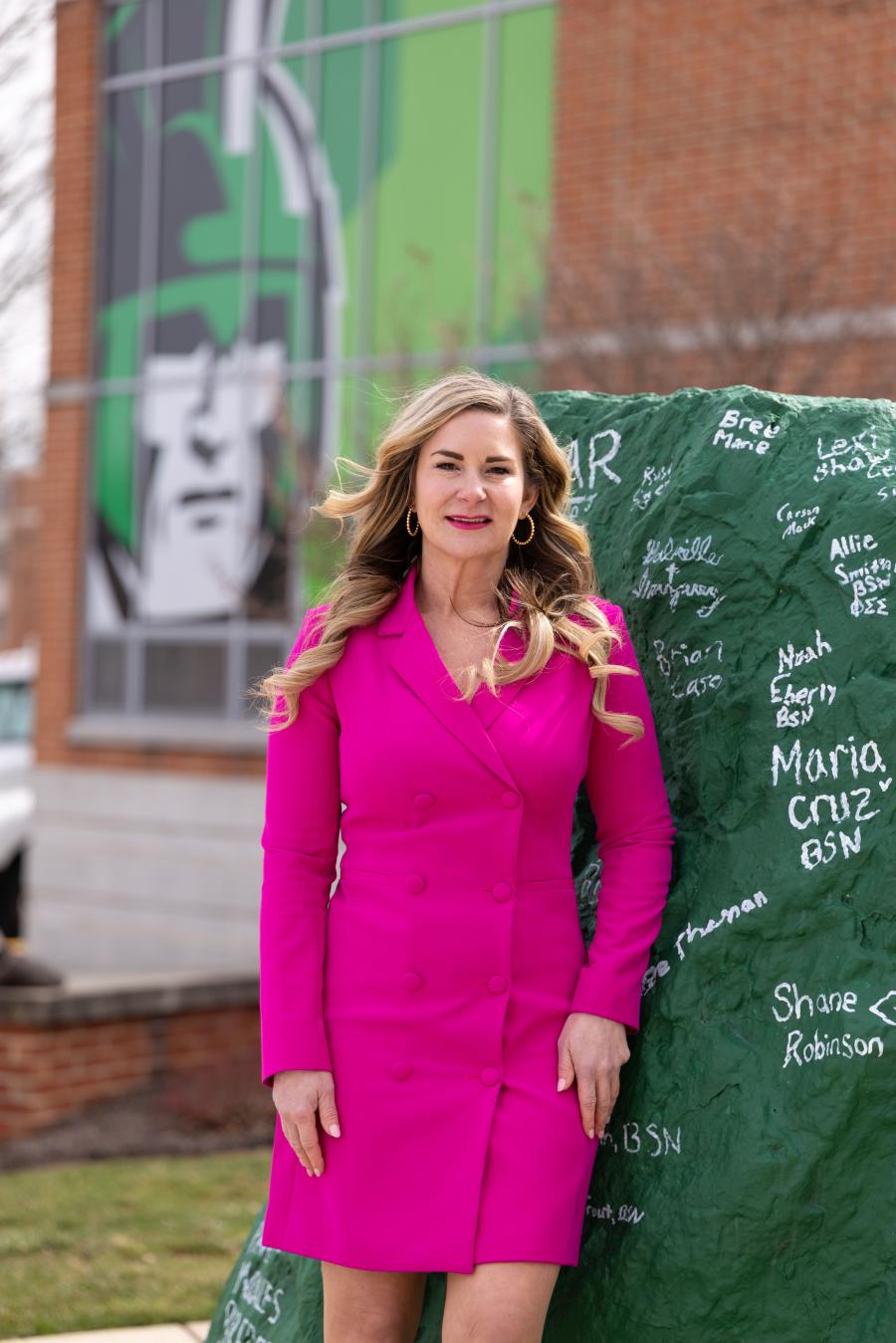
An environment for thinking critically
Each of these alumni can attest that York College provided not only a solid academic foundation for their careers in public service but also the skills to think critically and form world views.
“One thing I loved about York College was that their poli-sci professors at the time never let you know their political views,” Grove says. “They didn’t care where you were on the political spectrum. They cared that you knew how to defend your views.”
For Grove, that insistence on debate grounded in evidence rather than ideology proved essential preparation for legislative service. In a state as geographically, economically, culturally, and politically diverse as Pennsylvania, that skill was critical. All three graduates found that their York College experience helped them hone the ability to sit across the table from anyone and see the world through that person’s eyes.
“It gave a good fundamental base,” Grove says. “It helped you defend your position and research and critically look at others’ viewpoints and understand the lens they’re looking through.”
Berrier notes that her professors challenged her to grapple with real problems facing society and government. She also learned much from the wide-ranging perspectives of her fellow students.
“The skillset that I learned at York College was the ability to sit back and listen and think critically on very complex issues,” she says.
A convergence of place and possibility
York’s proximity to the capitals of Harrisburg and Washington, D.C., helped open doors for networking and internships for the three students. That positioning made state politics especially accessible in ways that students elsewhere might not have experienced.
Schreiber found that York City boasts a broad civic culture that welcomes emerging leaders.
“York really does have that voracious appetite for young, talented, civic- and community-minded people with servant leadership qualities,” he says. “It’s up to students to take advantage of it.”
He regularly advises students to get involved in the York community and maintain close ties to their alma mater.
In 2002, York College offered, as it does today, more than academic credentials. It provided access to mentors, public institutions, and meaningful debate on real-life topics. It furnished proximity to the levers of state and federal government and a campus culture that values engagement over polarization.
The campus was, and continues to be, a convergence of place and possibility, an environment that encourages students not just to study their communities but to serve them. Nearly a quarter-century later, the legacy of these three graduates of the York College Class of 2002 is written into legislation, economic development strategies, labor protections, and infrastructure decisions across Pennsylvania.
Public service is demanding and deeply human, but as the experience of Berrier, Schreiber, and Grove shows, it remains one of the most direct ways to make a lasting difference in a community or a state.